
What if your fleet could think, learn, and plan ahead turning every mile into insight?
-

American smart fleet
The energetical transition introduces irreversible constraints: electrochemical aging, thermal runaway margins, power electronics complexity, grid congestion, and load-dependent failure modes.
These are not software problems.
They are physics problems, and they compound at scale.
When fleets rely on tools that do not model these forces, degradation accelerates silently, energy costs become volatile, and operational risk increases long before dashboards signal failure.
The Core Failure of Conventional Fleet Software
Traditional platforms treat vehicles as discrete units and energy as an external service.
In electric fleets, this separation is structurally incorrect.
Battery impedance growth alters power availability. Thermal accumulation shifts efficiency curves.
Charging behavior feeds back into degradation kinetics. Grid constraints redefine dispatch feasibility.
When these interactions are not modeled together, fleets lose control of lifespan, cost, and reliability simultaneously.
We deliver for you, multi-physics fleet intelligence.
Our platform continuously models electrochemical state evolution, thermal propagation, mechanical fatigue, and power electronics stress under real duty cycles.
Failures are intercepted at the degradation mechanism, not at the symptom.
Prognostic Maintenance via Degradation Kinetics
Fixed service intervals assume uniform aging.
Electric systems do not age uniformly.
Gotham applies prognostics based on degradation kinetics, forecasting component life as a function of load history, temperature exposure, charge rates, and operational stress.
Maintenance actions are generated automatically, sequenced, timed, and optimized , before irreversible damage occurs.
This approach sees that your fleet reaches beyond its complete life cycle of 12+ years at the most optimal operation cost.
Energy–Mobility Co-Optimization Architecture
In clean transport, energy is not a utility.
It is a constraint-coupled variable.
Gotham operates fleets and energy infrastructure as a single optimization domain, resolving charging schedules, dispatch priorities, storage availability, grid congestion, and energy pricing simultaneously.
This co-optimization preserves battery health, stabilizes operating cost, and prevents infrastructure saturation as fleets scale.
Intervention becomes mathematically scheduled, not operationally reactive.
Life Cycle Intelligence Across First Life, Second Life & Recovery
Electric assets do not end at retirement.
Their material and energetic value persists, if it has been measured correctly.
Gotham gives you the tools for continuous asset lineage intelligence, tracking performance signatures from validation through field operation, second life redeployment, and material recovery.
Operational data feeds upstream into design, manufacturing, and supply chains, closing the loop between use, reuse, and industrial resilience.
By choosing Gotham, you are participating in creating a circular economy that allows the United States to close the loop on the local production and management of transport from critical mineral production to end of life.
-
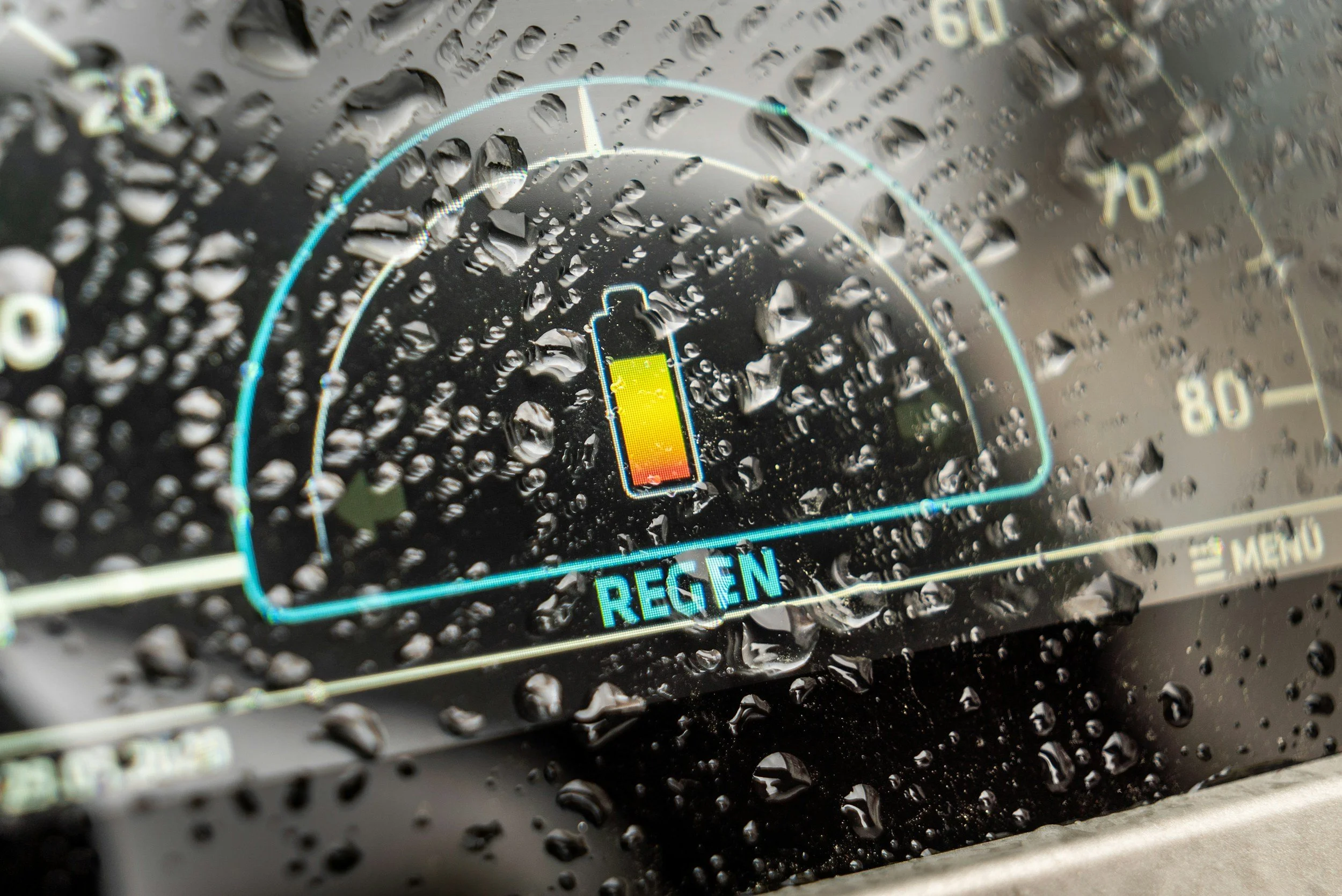
Energy indepedance & advanced life cycle battery
Transport electrification is no longer limited by vehicles.
It’s limited by how, when, and where they charge.
As fleets go electric, charging collides with hard constraints: limited grid capacity, unpredictable renewable supply, fixed departure schedules, and batteries that degrade faster under unmanaged fast charging.
Without intelligence, charging becomes the weakest link in the transition to clean transport.
Charging Is Where Transport Meets the Grid
Every electric vehicle is a moving energy load.
Every depot is a grid stress point.
When hundreds or thousands of vehicles plug in at once, unmanaged charging creates peak demand spikes, transformer overloads, missed routes, and rising energy costs.
Add renewables, solar that drops at sunset, wind that shifts by the hour and the system breaks unless charging adapts in real time.
Gotham orchestrates charging behavior across vehicles, batteries, depots, and the grid at machine speed.
Why Traditional Smart Charging Fails
Most “smart charging” platforms stop at schedules and price signals. They optimize sessions, not systems.
They react to the grid instead of coordinating with it.
They treat batteries as interchangeable, not as aging electrochemical assets.
That approach doesn’t scale.
Gotham operates deeper, at the level of battery physics, real energy behavior, and AI-driven decision systems distributed across edge and cloud.
This is what allows charging to work with renewables, not against them.
Charging Without Peak Penalties
Gotham predicts when vehicles need energy, when renewables will be available, and how much the site can safely deliver.
Charging loads are shifted, staggered, and shaped automatically cutting peak demand without delaying operations using Deep Machine Learning that is trained by how your fleet operates.
Battery Life That Survives Fast Charging
Uncontrolled fast charging accelerates degradation and shortens fleet life.
Gotham monitors electrochemical stress, thermal behavior, and imbalance in real time, adapting charging profiles per vehicle. Range stays predictable.
Battery replacement timelines move years out.
Renewables That Actually Power Transport
Solar and wind don’t follow fleet schedules.
Gotham aligns charging demand to renewable production using storage, forecasting, and real-time control.
Using Gotham AI energy management, the fleet unlocks the possibility to sell back the energy that would of been previously unseen and wasted.
Depots That Scale Without Grid Delays
Grid upgrades take years. Gotham uses digital twins to simulate depot expansion, charging strategies, and grid impact before assets are deployed.
Operators scale fleets without waiting on infrastructure catch-up.
Circular Energy for Transport Fleets
Transport batteries don’t end their value at vehicle retirement.
Gotham tracks battery condition across life cycles, enabling reuse in depot storage, buffering renewable supply, and stabilizing charging loads.
Energy value stays inside the transport ecosystem.
-

Second Life
At scale, electrification creates a new fault line.
As production accelerates, material supply tightens.
As fleets grow, dependence on foreign critical materials deepens. When batteries reach end of first life, most operations are left with only two outcomes: export or waste.
Both outcomes weaken U.S. industrial capacity.
Both erase long-term fleet return on investment.
Second life is no longer optional.
It is strategic infrastructure.
Why Conventional Second-Life Programs Fail
Most second-life initiatives begin after failure.
After performance has degraded.
After history has been lost.
After value has already leaked out of the system.
At that point, batteries are no longer assets. They are unknowns.
Gotham takes a fundamentally different approach.
Second life begins at first deployment.
Second Life Engineered from First Use
Because Gotham already operates inside live fleets, we continuously model the variables that determine whether a battery can live again.
Electrochemical aging trajectories.
Thermal stress accumulation.
Charge-induced lattice damage.
Load asymmetry and mission intensity.
This creates a longitudinal battery intelligence record , a physics-based memory of how each pack has lived.
When retirement approaches, there is no guesswork.
We already know when, where, and how every battery can be repurposed, before it ever leaves the fleet.
Predictive Second-Life Qualification
Gotham applies electrochemical degradation modeling and residual performance forecasting to determine second-life readiness while assets are still operational.
We resolve viability windows, repurposing performance envelopes, recoverable material yield, and residual economic value at the pack level.
This allows fleet operators to plan retirement with intent instead of urgency.
Negotiations are driven by data, not estimates.
Capital recovery becomes predictable.
Domestic Repurposing as Industrial Infrastructure
Second life only creates independence if it stays domestic.
Gotham deploys U.S.-based repurposing pipelines built around localized disassembly, remanufacturing intelligence, qualification testing, and grid-integration validation.
Batteries re-enter the system as stationary storage, microgrid buffers, depot stabilizers, and renewable smoothing assets, engineered to meet American grid and safety standards.
No offshore processing.
No material leakage.
No loss of strategic control.
Fleet Assets Reinvested Into Energy Resilience
Second-life batteries do not disappear into warehouses.
They return to work.
Deployed as depot load balancers, peak-shaving systems, blackout resilience layers, and emergency power reserves, retired fleet assets actively reduce operating costs and stabilize charging infrastructure.
Energy volatility is absorbed locally.
Grid dependence is structurally reduced.
Infrastructure hardens as fleets scale.
What once drained capital now reinforces operations.
Critical Materials Retained Inside the U.S. Economy
Beyond second life, Gotham controls the final layer of value: material sovereignty.
Through cell-level extraction intelligence, cathode and anode separation optimization, and domestic processing alignment, Gotham converts retired assets into controlled material inputs for U.S. manufacturing.
Waste becomes supply.
Imports become optional.
Retired batteries become national infrastructure inputs.
Fleet operators transition from material consumers to contributors to U.S. industrial resilience.
Urban Mining with Industrial Precision
Through our partnership with Cyclic Materials, Gotham integrates best-in-class urban mining technologies directly into the fleet lifecycle.
The MagCycle™ process uses patented magnetic separation to isolate high-value magnets, alloys, and conductors from end-of-life motors and assemblies with minimal environmental impact.
The REEPure™ refining process applies advanced hydrometallurgical recovery to extract rare earth oxides—including Nd, Dy, Pr, and Tb—achieving up to 98% recovery efficiency and reestablishing domestic access to critical materials essential for electrification.
Recovered elements are purified and reintegrated into American manufacturing, feeding the next generation of electric systems, drivetrains, and energy infrastructure.
Total Vehicle Life Cycle Accountability
Gotham’s commitment extends beyond components.
We deliver U.S.-based, full-vehicle lifecycle closure in partnership with American Steel.
Mobile on-site depollution teams execute certified dismantling, fluid recovery, electronics handling, and hazardous material removal directly at fleet locations. When centralized processing is required, Gotham manages secure logistics to domestic partner facilities operating under strict EPA and DOE protocols.
Every operation is documented through audit-ready certificates of destruction and material recovery, enabling traceable carbon accounting, regulatory compliance, and verified sustainability claims.